
The Golf Fitness Myth Busted: Why Strength Training Improves Swing Speed for Golfers


Golf Isn’t About Avoiding Strength—It’s About Using It Correctly

For years, golfers have been told to avoid weight training.
“Don’t lift—you’ll get too stiff.”
“Stay loose.”
“Golf is about feel, not strength.”
It sounds logical. But it’s wrong.
Modern research—and what we see every day working with players—shows the opposite:
Strength and proper conditioning make the golf club faster.
When adding strength correctly, your body becomes more capable of producing speed, controlling movement and sustaining performance across every swing.
It leads to:
- More clubhead speed
- Better control and consistency
- Fewer injuries over time
The issue isn’t strength. It’s whether your body can actually support the golf swing you’re trying to repeat.
Should Golfers Lift Weights?
Yes. Golfers should lift weights because training for strength improves swing speed, enhances stability and reduces injury risk when performed correctly.
The Origin of the “Don’t Lift” Myth
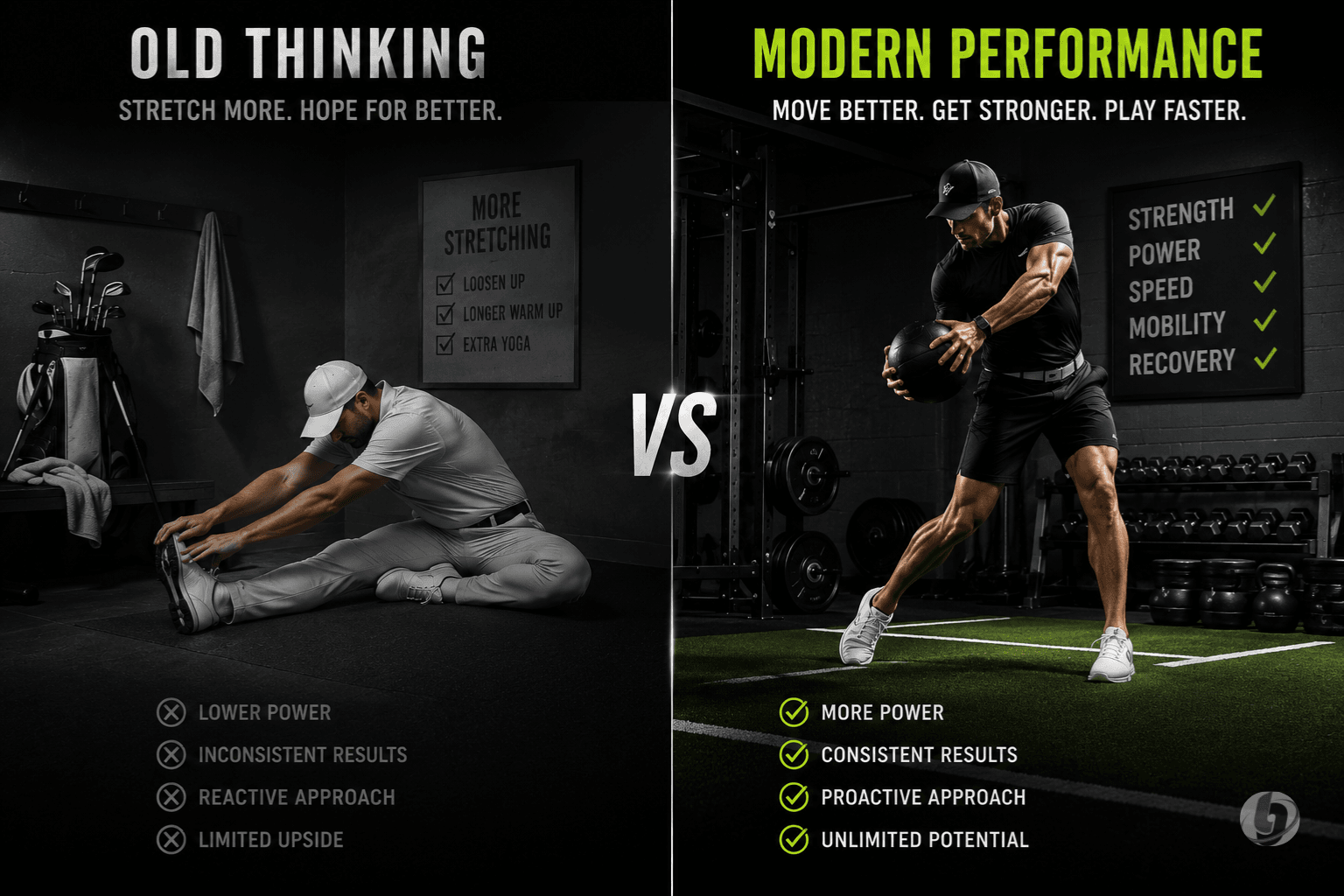
The myth that a strength program will hurt your golf comes from outdated thinking.
Golf was once viewed as:
- A finesse sport
- A feel-based skill
- Separate from athletic development
At the same time, traditional strength training meant:
Heavy training focused on muscle size
- Isolation movements
- Limited range of motion
- So the conclusion became:
Strength = stiffness
Stiffness = bad for the swing
But that’s not strength training.
That’s misapplied training.
Comparing strength training vs bodybuilding misses the point. Modern training for golf is built around movement, not muscle size. Power and strength will enhance your golf swing.
What the Research Actually Says
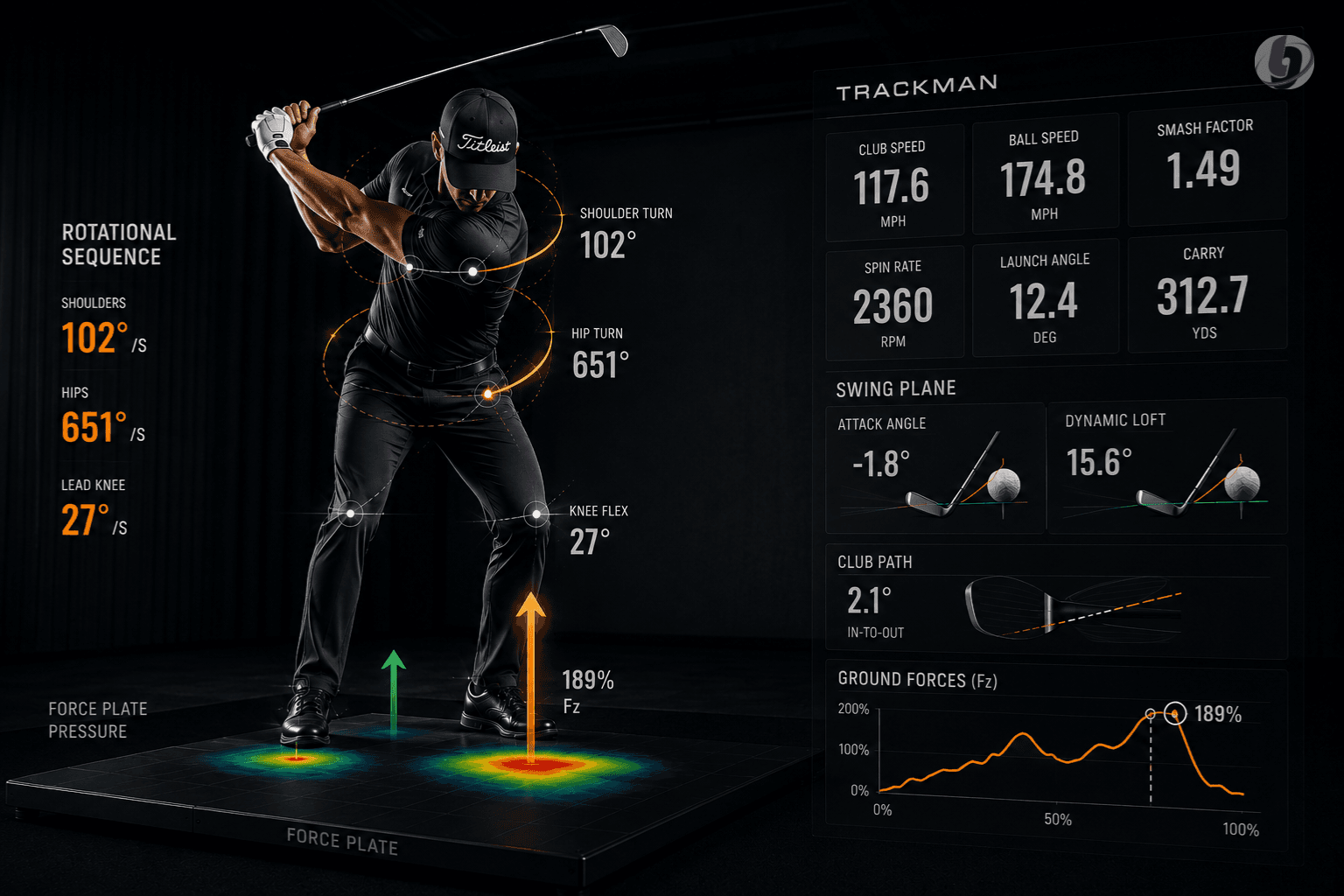
Modern research consistently shows:
Stronger golfers produce more speed.
Structured programs have been shown to increase:
- Club head speed by 3–10%
- Ball speed and distance
- Force production during the swing
Research comparing strength training vs traditional swing training shows that golfers who train for strength improve overall club head speed and driver speed more effectively.
Why?
Because the golf swing is a force transfer system.
To swing a golf club efficiently, you need:
- Lower body strength
- Core strength
- Rotational sequencing
When these improve, the result is simple:
The golf club moves faster. The ball travels farther.
Does Strength Increase Swing Speed?
Strength training improves swing speed by developing lower body strength, rotational power, and force transfer through the kinetic and kinematic chain, leading to measurable gains in club speed and ball speed.
How Strength Training Improves Your Swing
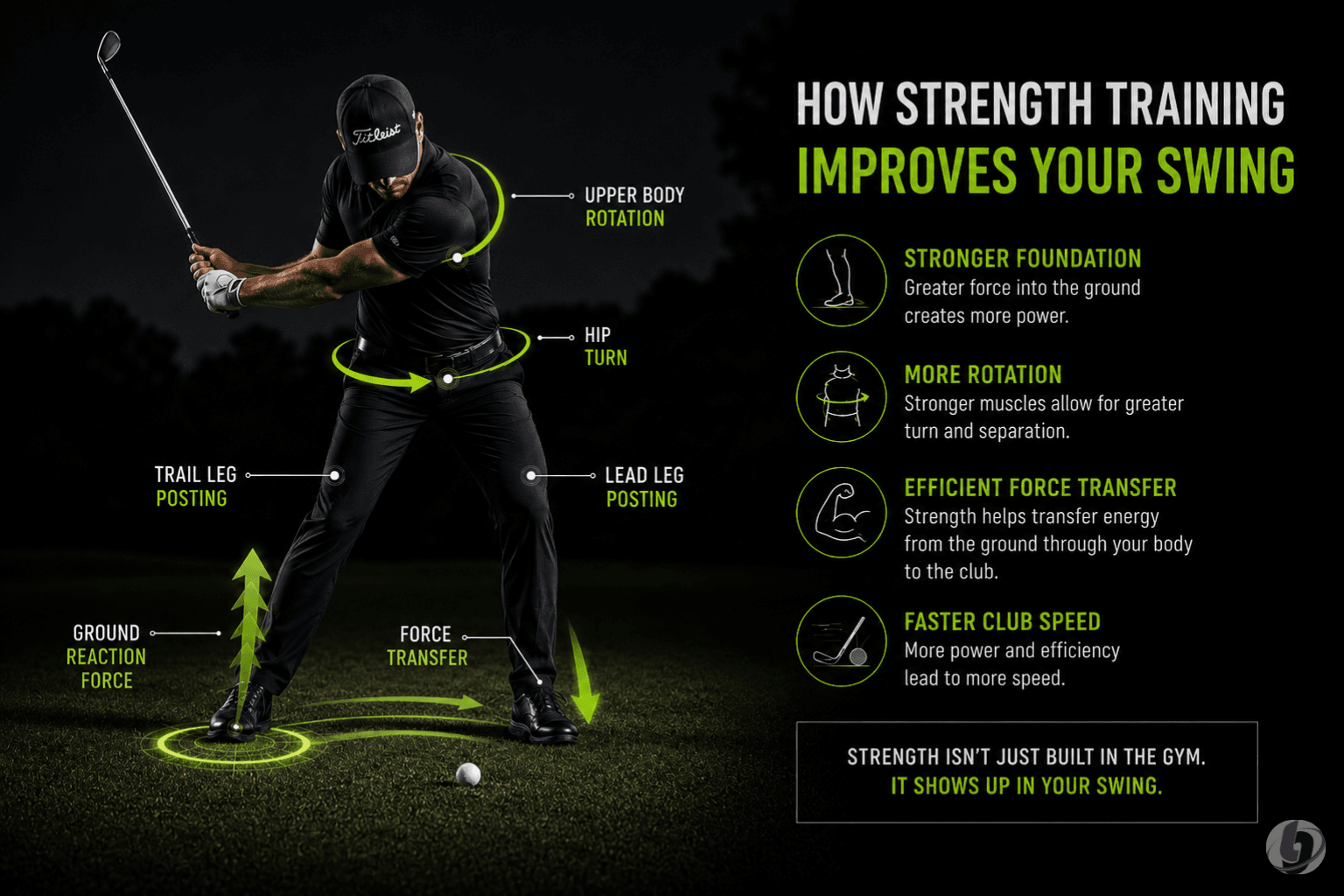
Strength training doesn’t just build strength—it improves how your body produces and transfers force during every swing.
Increased Swing Speed
More force from the ground leads to more energy transferred into the golf club.
This directly improves:
- Clubhead speed
- Driver clubhead speed
- Distance
Golfers who focus on increasing strength often increase their club head speed without changing their swing mechanics.
Better Stability and Balance
A stronger body allows you to:
- Stay centered
- Control rotation
- Maintain posture
This leads to better swing mechanics and more consistent ball striking.
Improved Sequencing
The golf swing depends on timing:
Lower body → torso → arms → club
Strength training teaches your body how to sequence properly, improving efficiency and allowing you to swing a club faster without losing control.
Reduced Fatigue
Over 18 holes, fatigue impacts every swing.
Stronger golfers maintain:
- Posture
- Speed
- Control
This leads to better golf and more consistent performance.
Why Strength Matters in the Golf Swing
The golf swing depends on how efficiently the body transfers force from the ground through the hips, core, and upper body into the golf club. Strength improves this transfer, allowing golfers to swing faster without losing control.
This is why a structured golf physical assessment matters before blindly adding training.
Strength vs Flexibility — A False Tradeoff
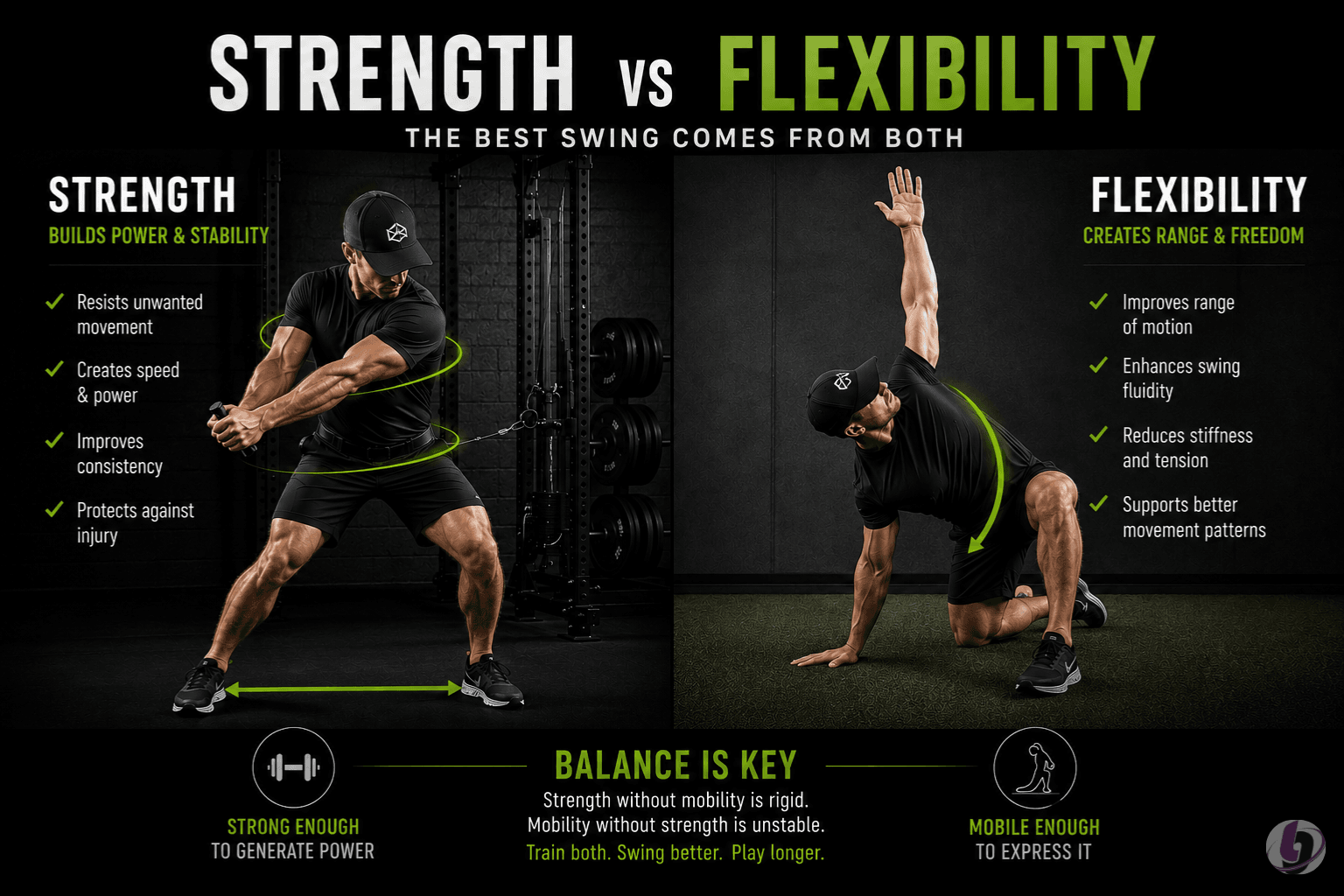
One of the biggest myths is:
Strength training makes you stiff.
In reality:
Mobility and strength work together.
When you strength train through full range of motion, you improve:
- Flexibility and strength
- Movement control
- Joint stability
The problem isn’t lifting weights.
The problem is:
- Poor programming
- Ignoring mobility (which isn't always “flexibility”)
- Training on flexibility without strength
The Right Way for Golfers to Lift
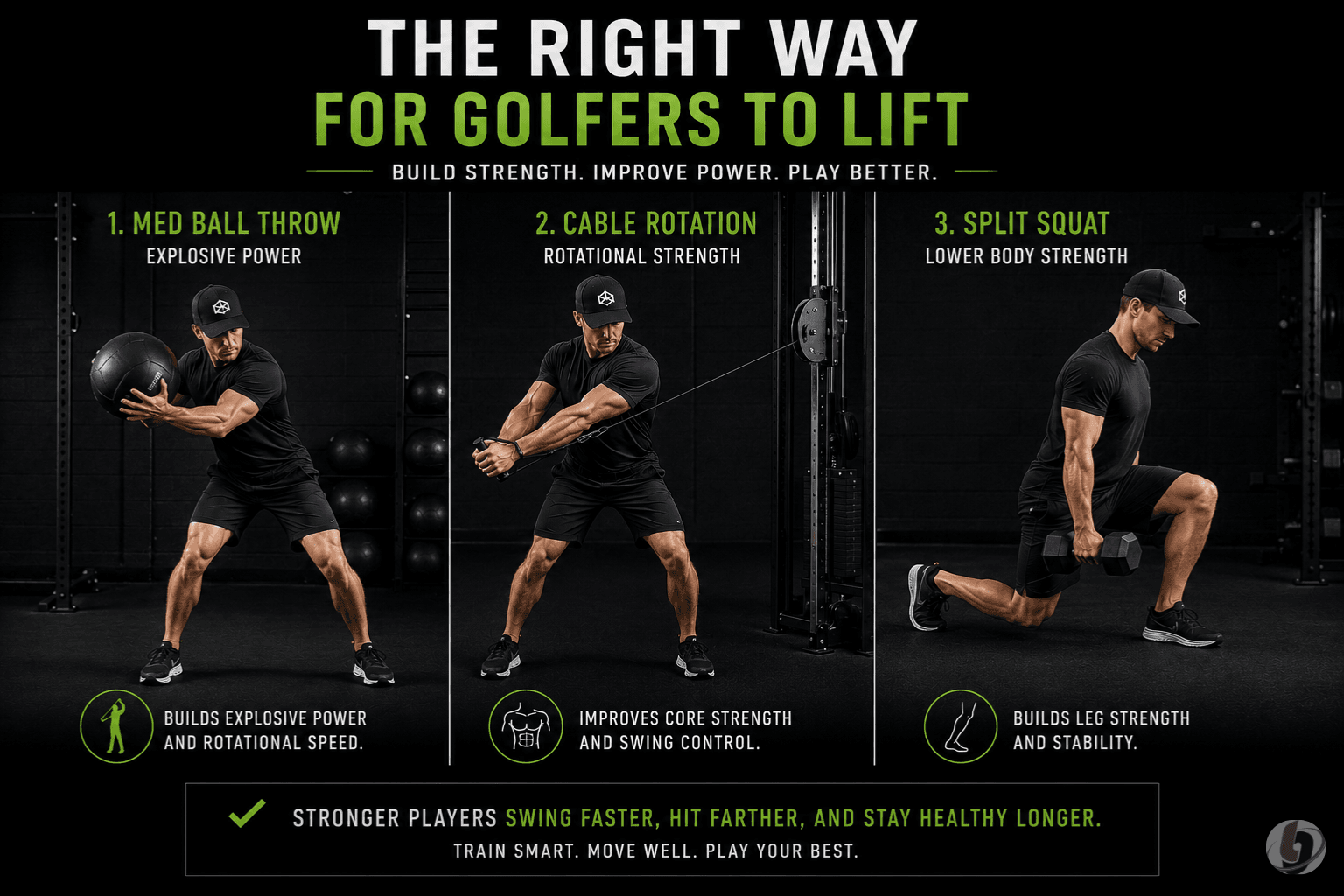
Golfers don’t need bodybuilding programs.
They need strength and power golf specific training.
Focus Areas:
- Core strength
- Lower body strength
- Upper-body push and pull strength
Key Movement Patterns:
- Rotation
- Anti-rotation
- Hinge
- Squat
Include Power Training (Power = Strength x Speed)
To increase swing speed, golfers need explosive strength.
Exercises like:
- Medicine ball throws
- Cable rotations
- Speed training drills
These improve speed and power, not just strength.
Avoid:
- Training only for muscle size
- Excessive isolation work
- Ignoring movement quality
Benefits of Strength Training for Golfers
- Increased clubhead speed
- Improved swing speed
- Better balance and stability
- Reduced injury risk
- Enhanced golf performance
Injury Prevention Benefits
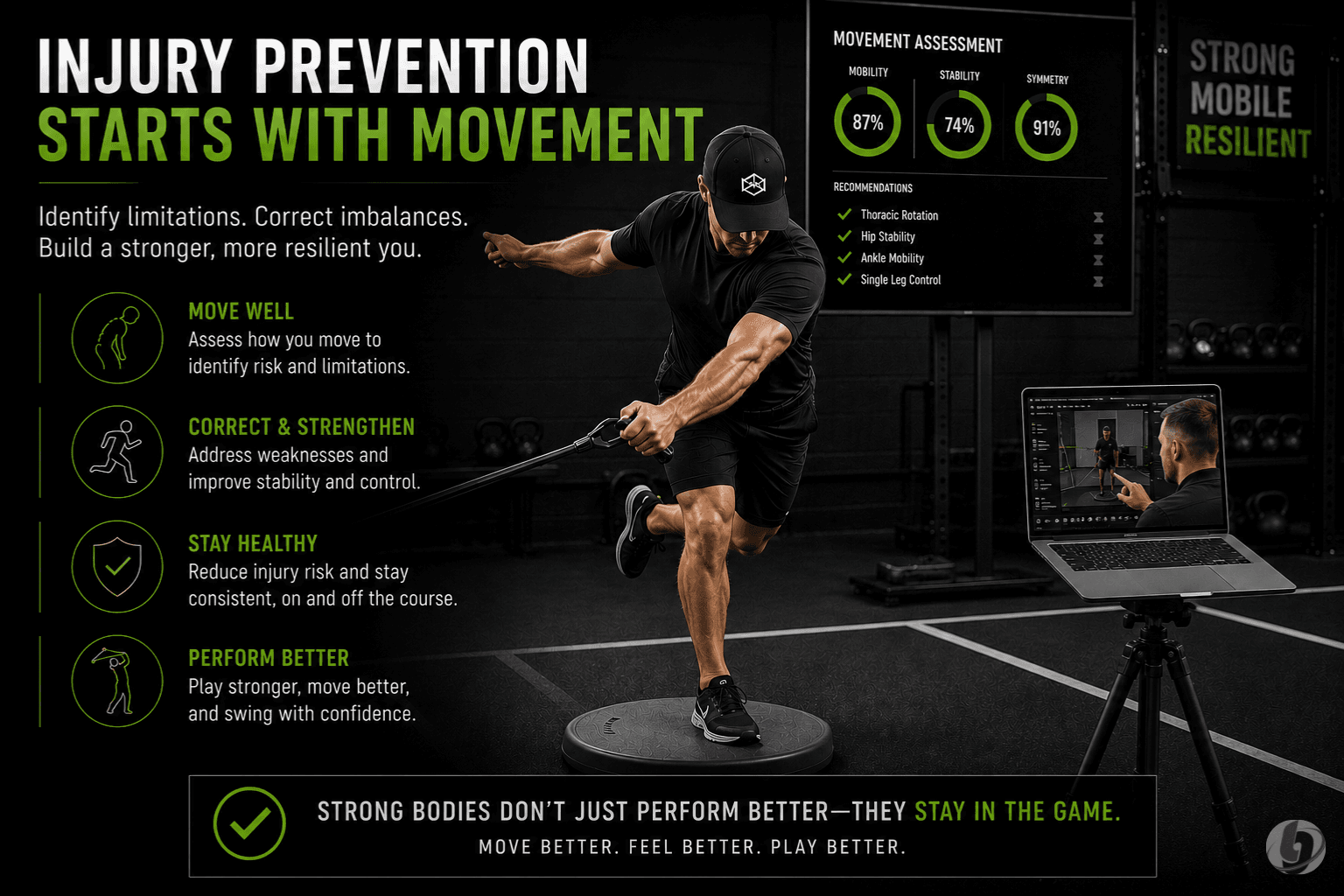
Becoming stronger also reduces injury risk.
It improves:
- Joint stability
- Posture
- Movement efficiency
Many golfers deal with injuries because their body cannot support the demands of the swing.
Building strength addresses that directly.
Best Strength Training for Golf Performance
The best exercises for golfers include squats, deadlifts, rotational cable work, medicine ball throws, and core stability exercises that improve strength, mobility, and swing performance.
Sample Beginner Golf Strength Routine
If you’re new to training, keep it simple.
2–3 Days Per Week
Lower Body + Core
- Goblet squats
- Deadlifts
- Split squats
Core Stability
- Planks
- Side planks
Rotation
- Cable anti-rotations into rotations
- Medicine ball throws
Focus: Important for Golfers
- Controlled movement
- Full range
- Consistency
A structured strength training program builds a foundation for long-term improvement.
Common Mistakes to Avoid
Lifting Without Mobility
Strength without movement leads to restriction.
Ignoring Rotation
Golf is rotational—your training should be too.
Training Like a Bodybuilder
Golfers are athletes.
Inconsistency
Strength gains require consistency.
Relying Only on Swing Training
Many amateur golfers focus only on swing training or training aids, but without physical training, the body cannot support the motion.
The Real Takeaway: Explosive Strength Matters
The myth that becoming stronger hurts your golf is outdated.
The reality:
Training for Strength improves your ability to swing a golf club efficiently.
It allows you to:
- Generate speed
- Maintain control
- Improve performance
If your body cannot support a proper golf swing, your swing will not improve.
Frequently Asked Questions
Should golfers lift weights?
Yes. It will improve swing speed, control, and injury resilience.
Will lifting weights mess up my accuracy in golf?
No. Proper strength training enhances your swing rather than hurting it.
How often should golfers train for strength?
2–3 times per week is ideal.
What exercises increase swing speed?
Exercises that improve:
- Lower body strength
- Rotational power
- Core stability
Final Thought
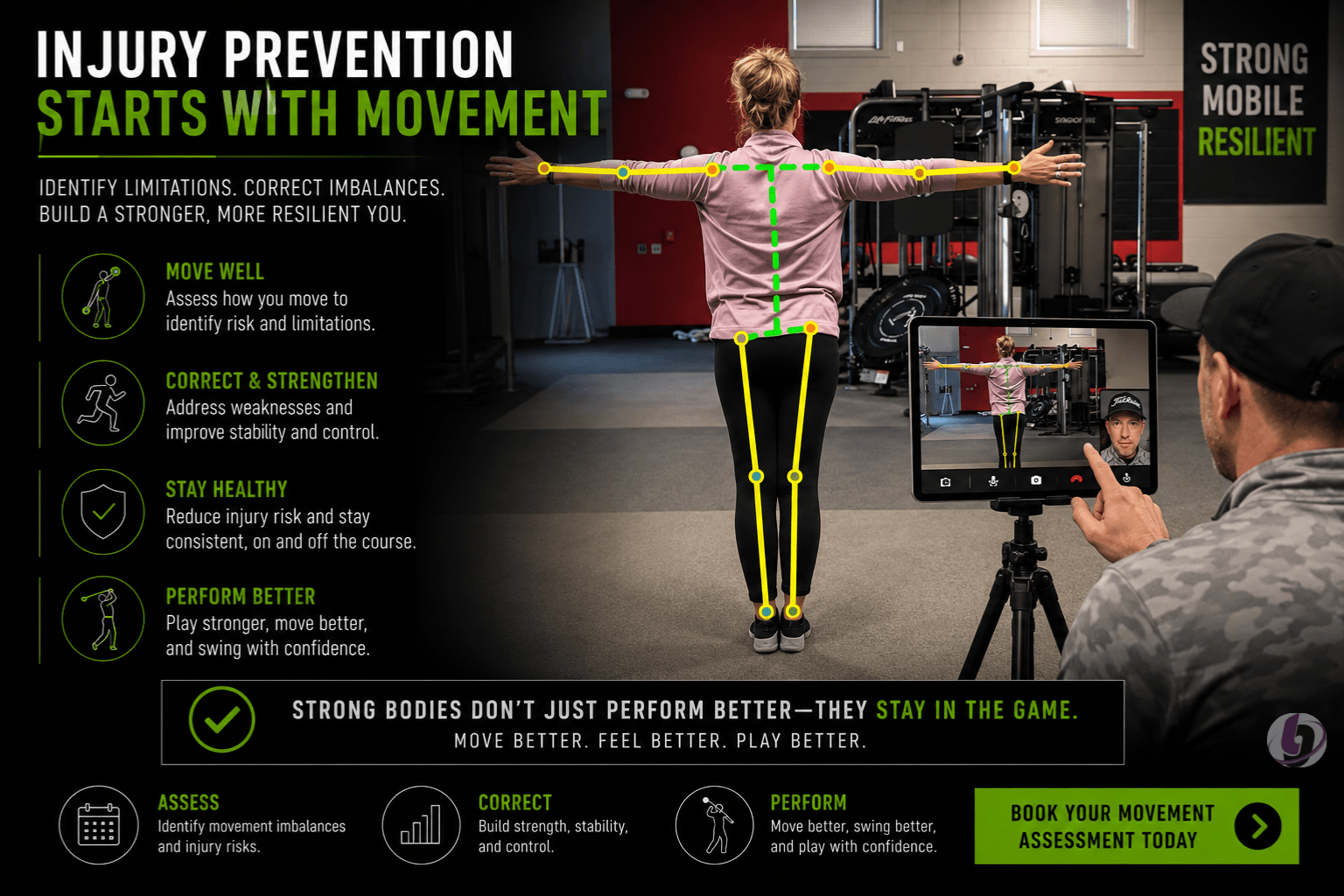
Strength in golf is not about building muscle alone—it’s about improving how the body produces and transfers force during the golf swing.
Golf performance doesn’t start with your swing.
It starts with the body creating it.
If you’re unsure where your body is limiting your swing, that’s where the process starts.
Find Out What’s Limiting Your Swing