
Golf Shoulder Mobility and the Golf Swing: Building Power and Accuracy for a Pain-Free Golf Swing


Accuracy, consistency, and control in golf are often discussed through grip, alignment, or swing technique. Yet for many golfers, those adjustments can plateau quickly if there is another limiter living higher up the chain: the shoulders.

A reliable golf swing depends on how well the shoulders can move, stabilize, and coordinate with the rest of the body under speed. When shoulder mobility or control is lacking, even technically sound golfers experience inconsistent ball striking, swing faults, and frustration.
This article explains the role in the golf swing played by shoulder mobility and stability, how rotational sports research informs modern golf performance, which shoulder tests matter most for a golfer, and how improving shoulder control can unlock both power and accuracy—without sacrificing a pain-free approach to the game.
Golf, the Golfer, and Why Shoulder Mobility Matters
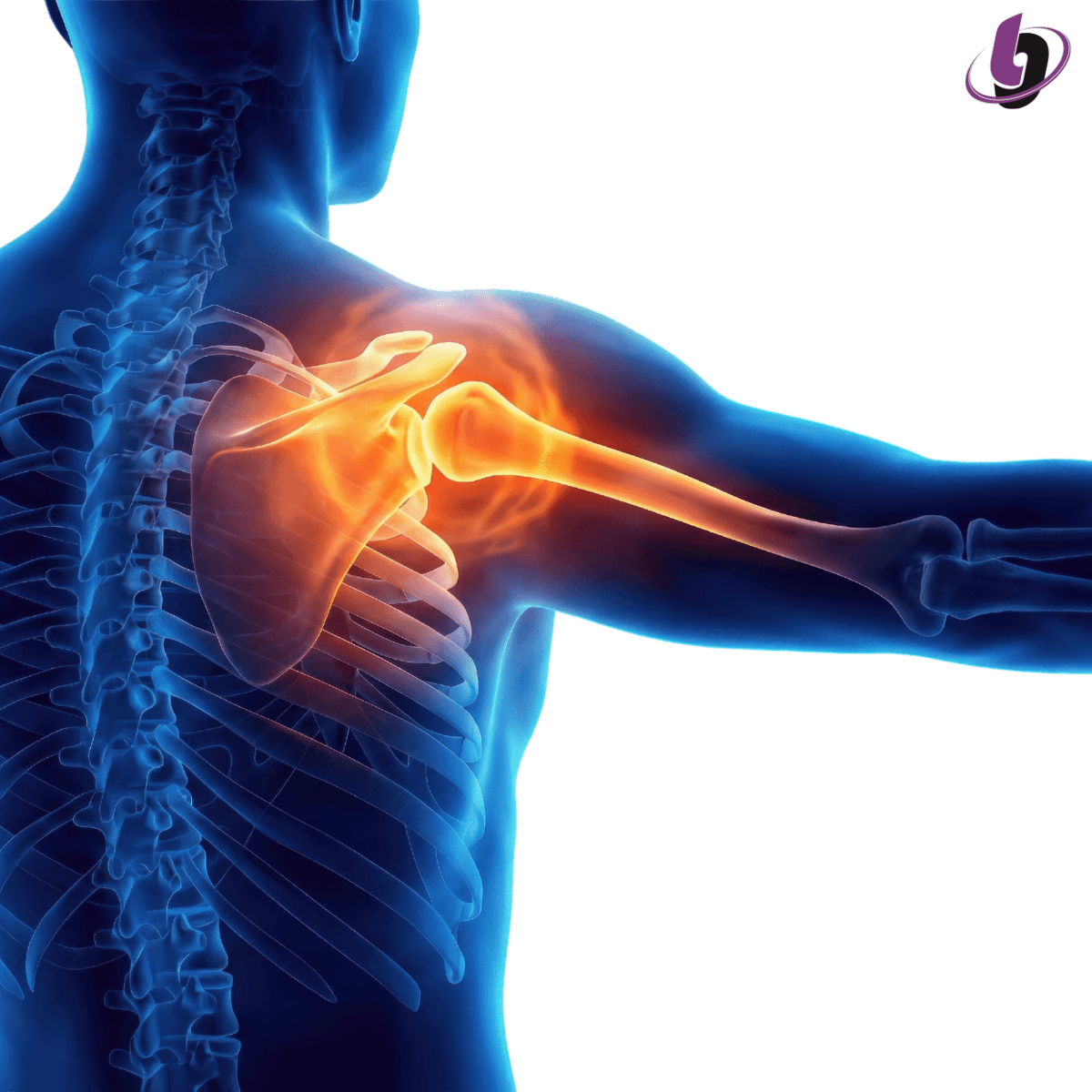
Many golfers chase positions without understanding whether their body can actually reach or control them. The shoulder complex must balance freedom of movement with the ability to stabilize the arms and club throughout the swing arc.
Shoulder mobility refers to the ability of the shoulder joint to move through all of its required ranges of motion while maintaining control. In golf, that range must exist in coordination with posture, spine alignment, and sequencing from the lower body through the upper body.
When a golfer lacks good mobility at the shoulders, the body compensates. That compensation often shifts stress downward towards the lower back, upwards to the neck and/or elbow regions, alters posture, and disrupts the timing of the downswing. Over time, limited mobility can reduce distance and control while increasing the risk of injury patterns.
Simply put, mobility allows the shoulders to rotate efficiently so the club can return to the ball on plane—without excess tension or timing-dependent fixes.
Golf Swing Demands: Shoulder Movement Under Speed

The golf swing places unique demands on shoulder movement. Unlike linear sports, golf is rotational, requiring precise coordination between the hips and shoulders while maintaining balance and posture.
During the backswing, the trail shoulder must externally rotate, abduct and flex, to allow the arms to set properly at the top of the backswing. During the downswing, that same shoulder transitions into adduction and horizontal adduction while staying stable enough to guide the club through impact.
The lead shoulder plays an equally important role, allowing the arms to move across the chest (horizontal adduction), while maintaining a consistent swing radius (flexion). If shoulder mechanics break down, swing mechanics follow.
An efficient swing depends on shoulders that can move freely without losing joint control.
Golf Performance Insights from Rotational Sports Research
In baseball, tennis, and other rotational sports, shoulder stability is essential for both accuracy and durability. Research consistently shows that imbalances in rotator cuff strength, particularly between external rotation and internal rotation, correlate with decreased performance and higher injury risk.
While golf produces lower peak rotational shoulder velocities than pitching, it demands extreme precision. A few degrees of lost control at the shoulder joint can mean the difference between a flushed shot and a miss-hit.
For golf performance, the lesson is clear: shoulders must be mobile enough to access a full range of motion, yet stable enough to repeat movement under speed. This balance is essential for generating power without sacrificing control.
Shoulder Mobility, the Spine, and Golf Posture
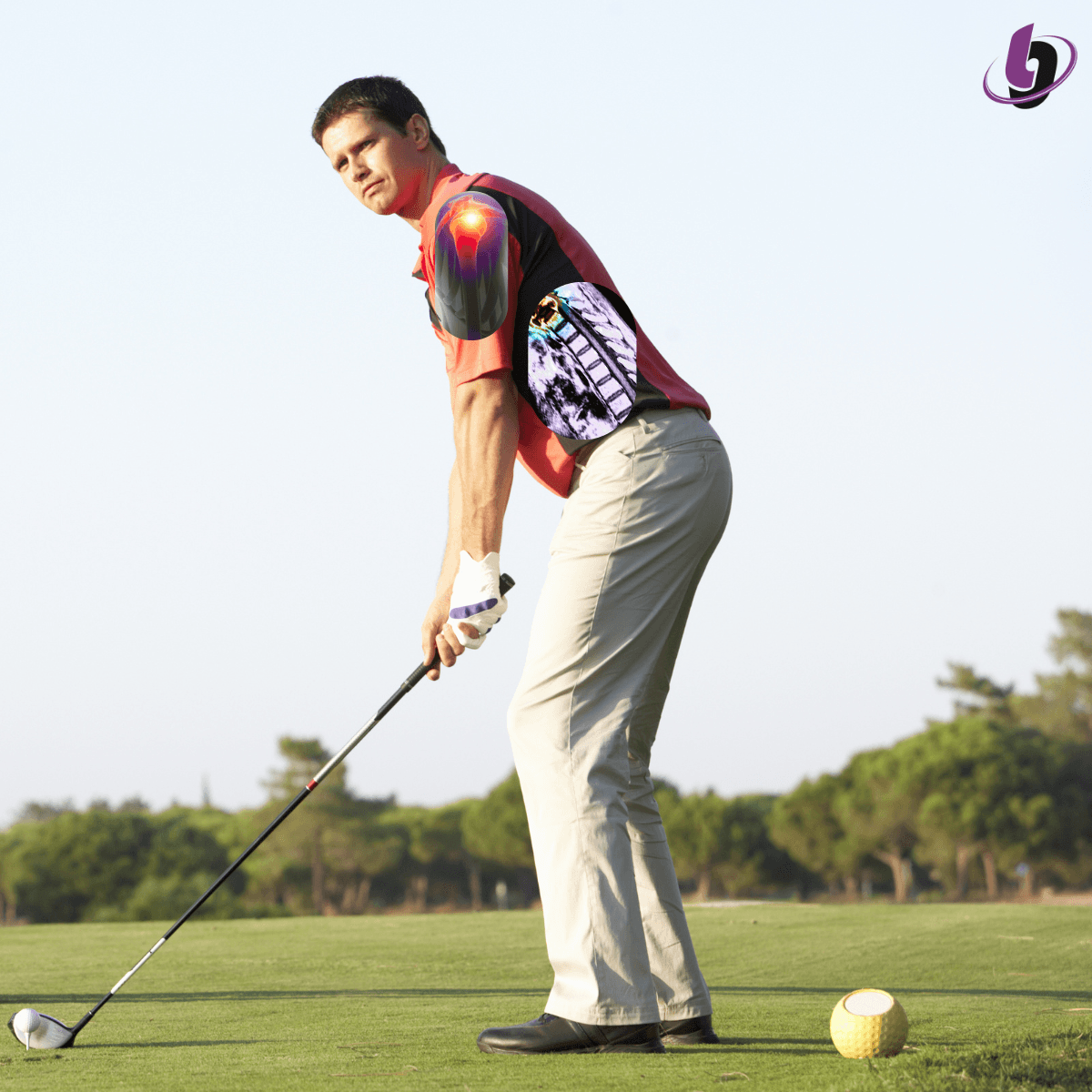
Shoulder mobility does not exist in isolation. It is influenced heavily by spine mobility, particularly in the thoracic spine and upper back.
When thoracic spine movement is limited, the shoulders often attempt to make up the difference. This can degrade golf posture, reduce rotation of the shoulders, and increase strain on the shoulder muscles.
Limited mobility in the shoulders combined with restricted spine movement often forces compensations that show up as early extension, loss of posture, casting, chicken winging, scooping, or an overactive lower body trying to generate speed.
Mobility in golf performance depends on how well the shoulders and spine work together.
Joint Control and the Role in the Golf Swing
The shoulder is a highly mobile joint, which makes stability even more important. Without adequate joint control, freedom of movement becomes chaos.
In the golf swing, the shoulder joint must stay centered as the arms accelerate. When joint control is lost, the clubface becomes harder to manage, sequencing breaks down, and timing-dependent swings emerge.
This is why shoulder function matters as much as shoulder flexibility. A physical therapist or strength and conditioning professional will often assess not just range, but how well the golfer can stabilize through that range.
Common Shoulder Limitations That Affect Golfers
Several patterns appear repeatedly in golfers struggling with consistency:
- Limited shoulder mobility, especially in external rotation (but total arc of internal plus external matters)
- Restricted shoulder mobility that shortens the backswing - this is usually seen via the raising of the arms or shoulder flexion
- Scapular instability that alters shoulder movement under speed - the shoulder blade serves as the anchor or the shoulder ROM being discussed in this article. Without it, the shoulder ROM’s are left to chance and prone to damage
- Decreased shoulder control that forces compensation elsewhere
A limited shoulder rarely presents as obvious pain at first. More often, it appears as inconsistent contact, poor distance control, or difficulty repeating a better swing.
Over time, these patterns can contribute to shoulder pain and reduced confidence in the golf game.
Shoulder Mobility Tests Important for Golfers
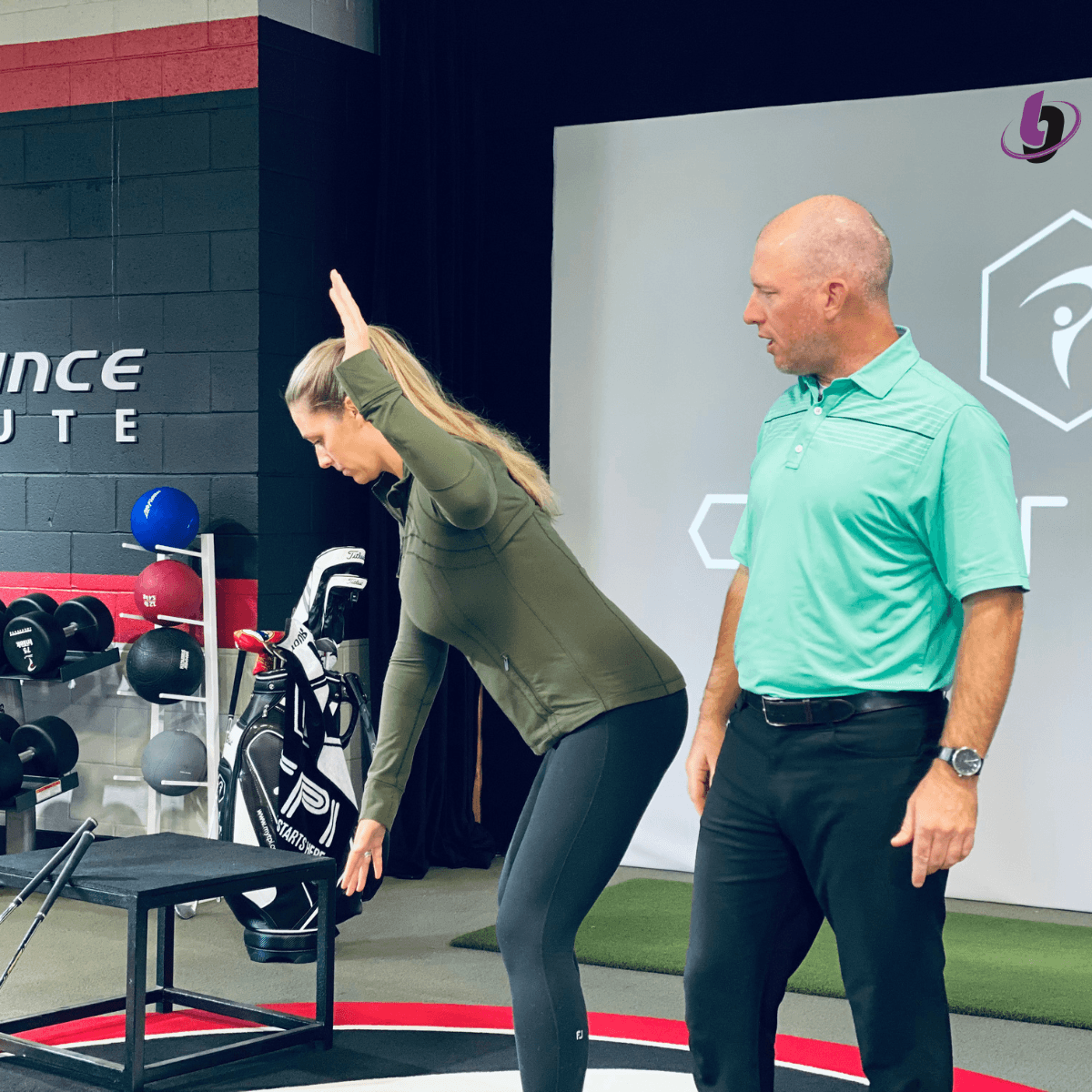
Joint and Mobility for Golf Screening
At Lance Gill Performance, we emphasize shoulder screening because it reveals whether a golfer can physically support the swing being taught.
Tests such as the 90/90 external rotation assessment evaluate shoulder range of motion while maintaining posture. Wall slide tests assess shoulder movement, scapular stability patterns and thoracic spine coordination. Behind-the-back reach tests reveal asymmetries that may influence follow-through mechanics.
These screens help golfers understand whether swing faults are technical or physical in nature.
Improving Mobility in the Shoulder Without Losing Stability
Improving shoulder mobility should never mean sacrificing control. Mobility work must be paired with stabilization strategies.
Effective programs often include:
- Soft tissue mobility work to restore balance around the shoulder joint
- Rotator cuff strengthening in functional positions
- Scapular control drills that reinforce posture
A simple drill performed consistently often delivers more benefit than complex routines done occasionally.
Enhancing shoulder mobility while teaching the shoulder to stabilize under load is essential for a pain-free golf swing.
Mobility, Power, and Accuracy in the Golf Swing
Shoulder mobility allows the arms to travel through a larger swing arc, which supports generating power. Stability allows that power to be delivered accurately.
A powerful golf swing is not created by forcing speed, but by allowing efficient rotation of the shoulders while the core stability and lower body provide a stable base.
When hips and shoulders sequence correctly, the club accelerates naturally. This sequencing reduces stress on the lower back and improves ball striking.
Distance and control improve when mobility and stability are trained together.
Mobile Shoulders and Pain-Free Golf
Pain-free does not mean passive. A pain-free golf swing is one where the shoulders move efficiently without excessive strain.
Limited mobility often forces the body into stressful positions. Over time, this can contribute to shoulder injuries or chronic shoulder pain.
By addressing shoulder mechanics proactively, golfers can maintain a pain-free relationship with the game while improving performance.
Applying Shoulder Mobility to Improve Your Golf
To improve your golf, shoulder mobility must translate to the swing—not just the gym.
Start by assessing range of motion and shoulder function. Identify whether limitations exist in the backswing or downswing. Pair mobility drills with swing rehearsals so new movement patterns show up in real shots.
This approach helps golfers unlock better movement without chasing swing thoughts.
Final Takeaway: Why Shoulder Mobility Is Important for Golf
Shoulder mobility is important for golf because it supports consistency, power, and longevity. Mobility for golf is not about being loose—it’s about being capable.
When shoulder mobility allows efficient rotation, and stability supports control, golfers experience better swing mechanics, improved accuracy, and greater confidence in their golf game. The shoulder joint, after all is said and done, is simply a connection between the torso and the arms. As with any good connection, proper flow of energy is required to maintain the integrity or the motion ultimately desired.
For golfers seeking long-term improvement, understanding and training shoulder mobility is not optional. It is essential for generating power, maintaining posture, and building a reliable, pain-free golf swing.