
3 Power Leaks in Golf and reasons you're not hitting it farther



If you feel like you swing hard but the ball doesn’t go very far, you’re not alone. Many golfers chase distance by adding effort, speed, or swing thoughts, yet see little improvement off the tee. The problem usually isn’t how hard you swing—it’s how much energy is lost before it ever reaches the ball.
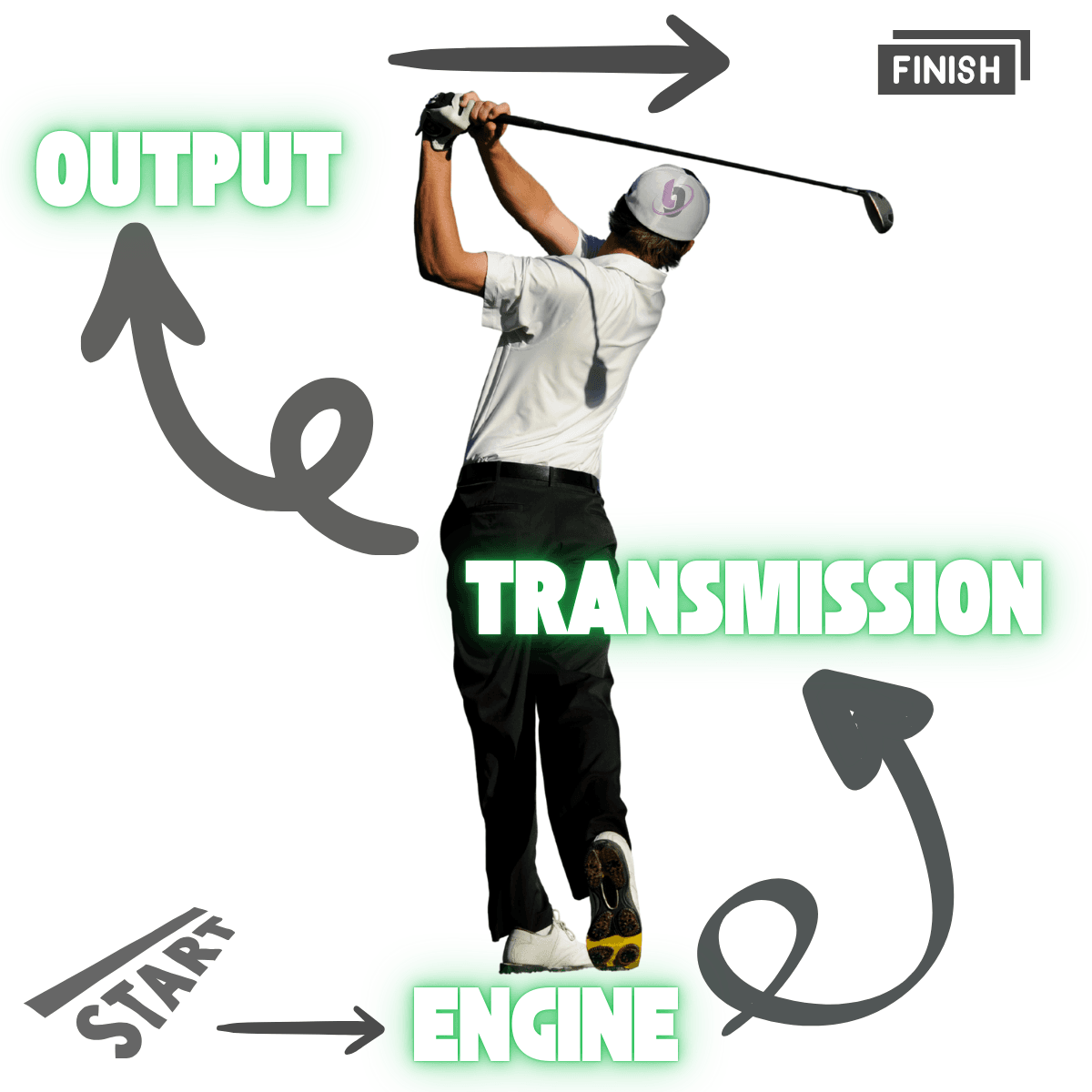
A golf swing is an energy transfer system. Power (unofficially) starts in the ground, moves through the body, and finishes at the club head. When that transfer breaks down, distance suffers. These breakdowns are called power leaks, and they are the hidden reason so many golfers struggle to hit it farther despite hours of practice.
This article breaks down the three power leaks that are killing your driving distance, how they show up in your swing, and what to do about them.
The issue isn’t effort. It’s how efficiently energy reaches the club
Why Power Matters in the Golf Swing
In an efficient swing, energy follows a sequence and speed is not created solely by swinging harder with the hands and arms. It is created by sequencing—how efficiently energy moves from the ground, through the lower body, into rotation, and finally into the club.
When a leak occurs anywhere along that chain, energy is lost. You may still hit the ball solidly, but the drive comes out weak, spins too much, or fails to carry the yardage you expect.
Most amateur golfers don’t have one problem—they have multiple stacking together.
The 3 Power Leaks That Are Killing Your Driving Distance
These are the major power leaks seen most often in lessons, golf instruction sessions, and swing reviews at every level of the game.
Power Loss #1: Inefficient Use of the Ground
The first leak involves how the golfer interacts with the ground. Powerful swings use the ground to create force, stability, and rotation. Without this, energy never fully builds.
How This Shows Up
- Staying flat-footed or passive (horizontal force production curves are low or late)
- Poor balance through impact (A/P & Vertical force production is low or late on lead foot)
Research and high-level coaching consistently show that players who hit it farther generate force through the chain and use it at the right moment in the downswing.
Power Loss #2: Poor Sequencing From the Lower Body
If sequencing breaks, speed never arrives.
In an efficient swing, the lower body leads. The hip laterally shifts, prior them beginning to rotate as the downswing starts, creating separation that allows energy to build. When the hands and arms start first, that sequence breaks down.
How This Shows Up
- Upper body dominates the downswing
- The swing feels rushed or stuck
- Difficulty generating consistent distance
Even with a good shoulder turn at the top of the swing, this leak prevents speed from transferring efficiently.
Power Loss #3: Casting and Early Release
This happens during the transition from backswing to downswing. Many golfers lose lag immediately, allowing the wrist angles to release too early. This casting motion dumps speed before the club ever reaches the ball.

How This Shows Up
- The club head passes the hands early
- The swing feels fast but produces low ball speed
- Launch condition will be suboptimal
This is one of the most common power leaks which golfers struggle with, to increase their distance.
Key Moments Where Power Loss Occurs
Most golfers don’t lack power—they leak it.
Loss of power doesn't happen randomly. It shows up at key moments:
- Moments prior to the top of the backswing
- The start of the downswing
- The moment just before impact
Recognizing when energy escapes is critical to fixing it.
How Power Leaks Affect Distance Off the Tee

When leaks are present:
- Clubhead speed drops
- Spin increases
- Center Face Contact is compromised
Drives lose Roll out after landing due to suboptimal launch conditions
Many golfers assume they need a swing change or new equipment. In reality, fixing leaks often produces immediate gains without overhauling technique.
Drills to Fix These 3 Power Leaks
1: Step-Change Direction Drill
This drill improves sequencing and ground use.
- Tee up a ball with feet together
- Make a slow backswing, while taking a step to your right.
- Step toward the target prior to you finishing your backswing
- Swing through and hold your finish
This drill forces the lower half of the body to lead and helps eliminate major power losses.
2: Lag Pump Drill
This drill addresses casting.
- Swing to the top
- Pump halfway down while maintaining wrist set
- On the third pump, release the club and hit the ball
- This improves awareness of lag and reduces early release.
3: Step Back Through Impact Drill
This drill improves force transfer.
- Make slow swings focusing on pushing into the ground with the Lead foot
- Feel the lead foot push forward and down into ground
- Allow the lead foot to step backwards towards the heel as a byproduct of the force created
This is commonly taught by a coach or pro during advanced golf lessons.
Reasons you're not hitting bombs
Across the world on YouTube and social media, golf tips often focus on positions of good swing instead of energy flow. While positions matter, they don’t fix power leaks by themselves.
High-level golf instruction prioritizes sequencing, timing, and force transfer—because that’s where distance is actually created.
Lessons vs. Guessing
A skilled PGA instructor looks for leaks, not just aesthetics. A swing can look “on plane” and still leak power.
One focused lesson identifying these issues often does more for distance than months of random swing changes.
Final Takeaway: How to Drive it Farther Without Swinging Harder
Power doesn’t come from effort alone. It comes from athletic efficiency.
When you identify the 3 power leaks, fix these 3 problem areas, and train with purpose, distance improves naturally. The ball launches faster, the drive carries farther than ever, and the swing feels smoother instead of forced.
That’s how golfers stop losing energy—and start turning it into real speed where it matters most: at the ball.